Qwen-Image 2.1 Uncensored vs. Krea 2: Hardware Telemetry, OOM Limits & Anatomy Showdown
A deep-dive technical comparison executed live on a local NVIDIA GeForce RTX 4070 (12GB VRAM). We benchmark VRAM footprints, memory crash limits, prompt fidelity, and the critical trade-offs between Native Vision-Language DiT and LoRA-patched TextFusion.
1. Hardware Telemetry & The 12GB VRAM Ceiling
Real-time GPU memory profiles recorded via nvidia-smi during live ComfyUI generation.
| Evaluation Metric | Qwen-Image 2.1 Uncensored | Krea 2 + LoRA Patch Stack | Engineering Assessment |
|---|---|---|---|
| UNET Weights | qwen-image-2.1-UC-Q4_K_M.gguf (4.6 GB) | krea2_turbo_int8_convrot.safetensors (13.5 GB) | Qwen GGUF is 66% lighter on disk and host RAM. |
| Text Conditioning | qwen3vl_8b_w4a8_heretic (6.3 GB) | qwen3vl_4b_fp8_scaled (5.2 GB, TextFusion) | Qwen leverages full 8B vision-language understanding. |
| Patch LoRAs Required | 0 LoRA (Native Abliterated) | 2 to 9 LoRAs (Refusal + Sliders) | Krea 2 requires LoRA chaining to disable safety refusals. |
| Standard Res (768x1152) | Passed (10,541 MiB) | OOM Crash (11,949 MiB peak) | Krea 2 failed with torch.OutOfMemoryError on 12GB GPU. |
| Stable Benchmark Res | 1024 x 1024 (1.05 MP) | 576 x 896 (0.51 MP, downscaled) | Qwen delivers 2x more pixels within safe memory margins. |
| Average Generation Time | 111.6s : 143.2s (25 steps, full DiT) | 57.4s : 106.1s (10 steps, downscaled) | Per megapixel, Qwen achieves superior throughput efficiency. |
Krea2_TextFusion_Refusal_Reduction LoRA pushes memory allocation over 11.9 GB during self-attention computation. On consumer 12GB workstations (RTX 3060, RTX 4070), rendering at standard vertical portrait resolutions reliably triggers out-of-memory crashes unless downscaled.
2. Visual Ground-Truth: Interactive Side-by-Side Sliders
Drag the center slider on each showcase to inspect skin textures, anatomy, and lighting fidelity.
Solo High-Fashion Portrait: Micro-Pores vs. Airbrushed Wax
Prompt Objective: Cinematic portrait on white linen couch, subtle draped silk revealing natural collarbones, 85mm f/1.4 lens, hyper-realistic skin texture with visible pores and zero plastic gloss.
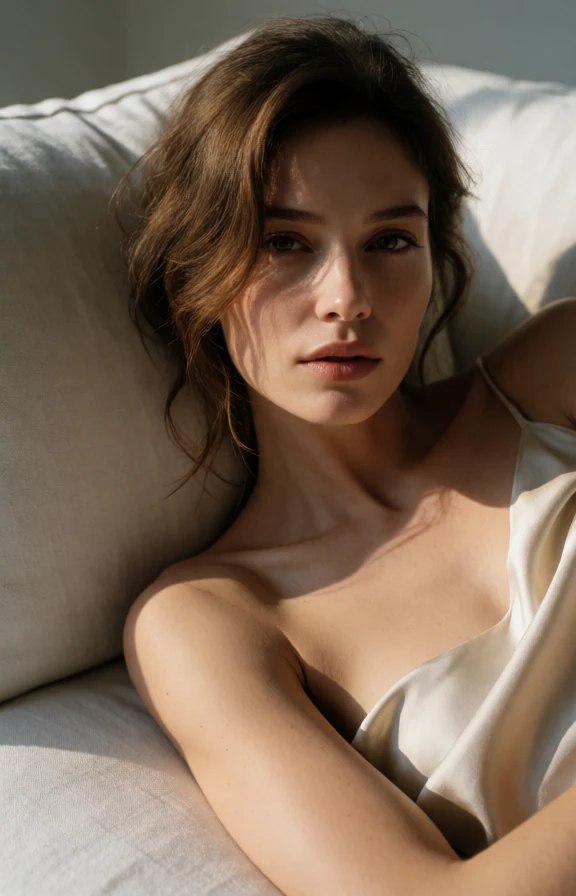

Qwen 2.1 Uncensored (Left)
- Skin Texture: Subsurface scattering with authentic epidermal variation, microscopic pores, and delicate freckles.
- Hair Strands: Flyaway messy wavy hair strands separate naturally with individual specular highlights.
- Anatomical Depth: Sharp collarbone ridges, shoulder concavity, and realistic tension in the neck muscles.
Krea 2 + LoRA Stack (Right)
- Skin Texture: Noticeable airbrushed mannequin finish with flattened micro-contrast despite the Detailer LoRA.
- Hair Strands: Strands clump into solid blocks, lacking fine individual strand separation.
- Anatomical Depth: Collarbone and upper chest appear flat with uniform lighting wash across the torso.
Couple Interaction: Authentic Emotion vs. Claw Hand Artifact
Prompt Objective: Young stylish couple laughing together on a sun-drenched rooftop veranda by the sea, the man tucking a hair strand behind her ear, detailed hands with knuckles and veins.
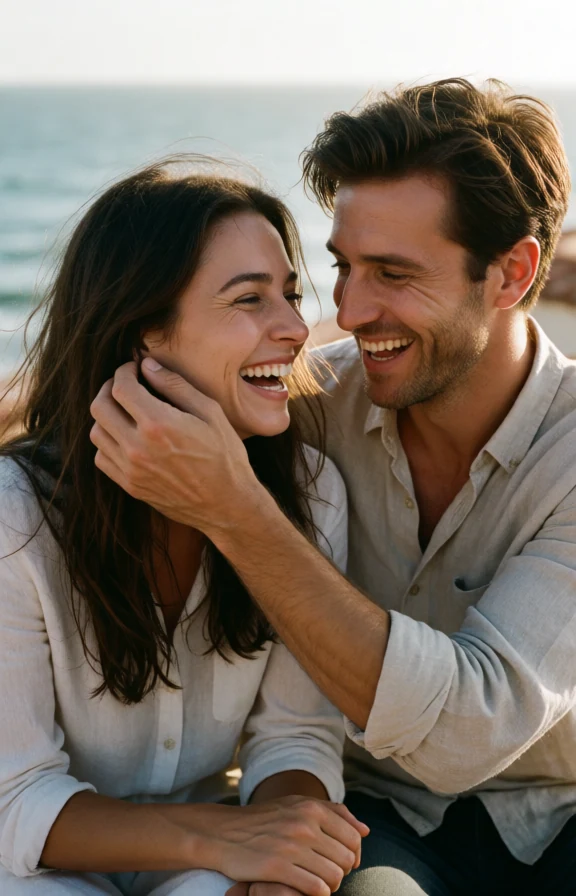
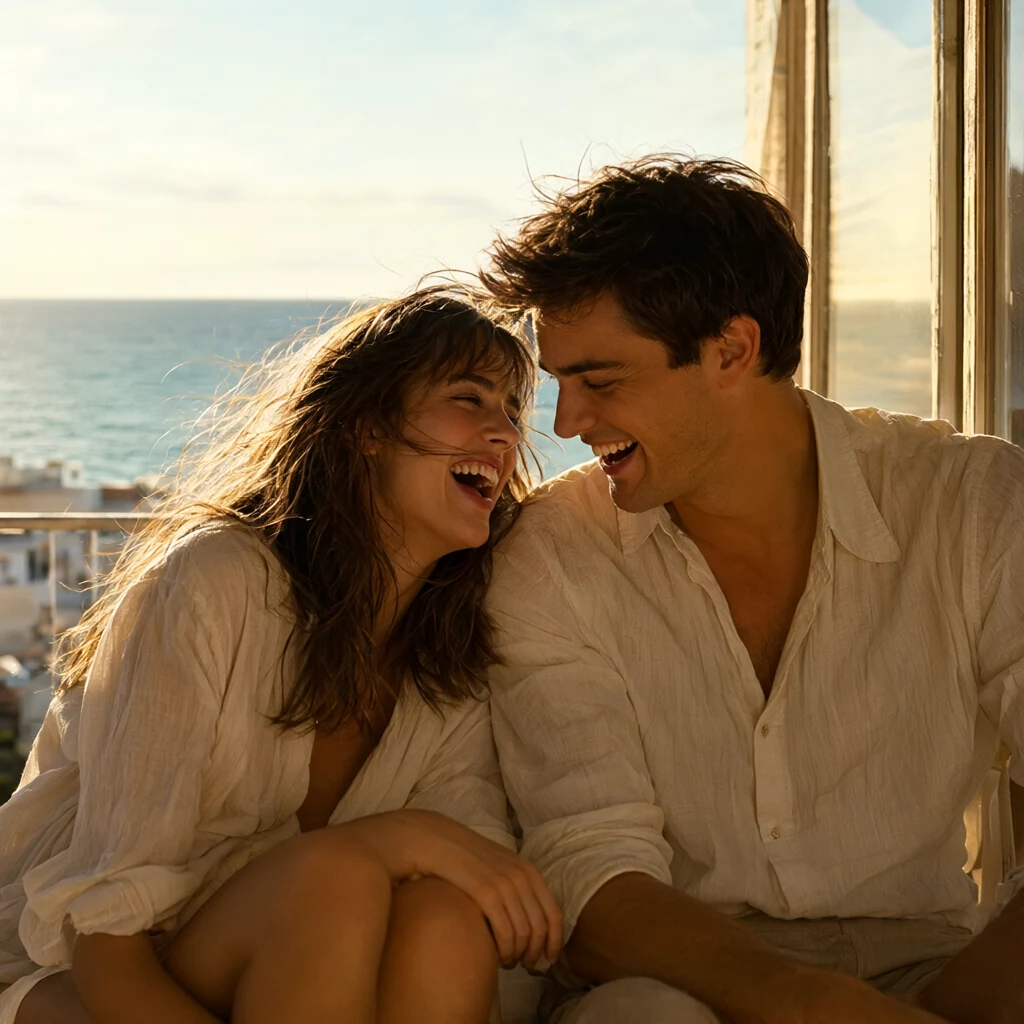
Qwen 2.1 Uncensored (Left)
- Spatial Context: Perfectly captures the wide Mediterranean sea balcony, open sky, and warm golden rim light.
- Facial Emotion: Genuine, spontaneous laughter and authentic eye crinkles between both subjects.
- Clothing Physics: Soft linen shirts with authentic fabric weave and creases falling naturally over limbs.
Krea 2 + LoRA Stack (Right)
- Hand Anatomy Artifact: The man's hand on the cheek collapses into a claw artifact with awkwardly bunched fingers.
- Cramped Crop: Because resolution had to be capped at 576x896 to prevent OOM, the sea backdrop is completely cropped out.
- Interaction: Faces are crowded tightly into the frame with stock-photo stiffness.
Cyberpunk Rain & Neon: Volumetric Mist vs. Specular Plastic
Prompt Objective: Athletic woman in Tokyo back-alley rain, wet messy dark hair, translucent iridescent raincoat draped over shoulders, water droplets beading on realistic glistening skin.
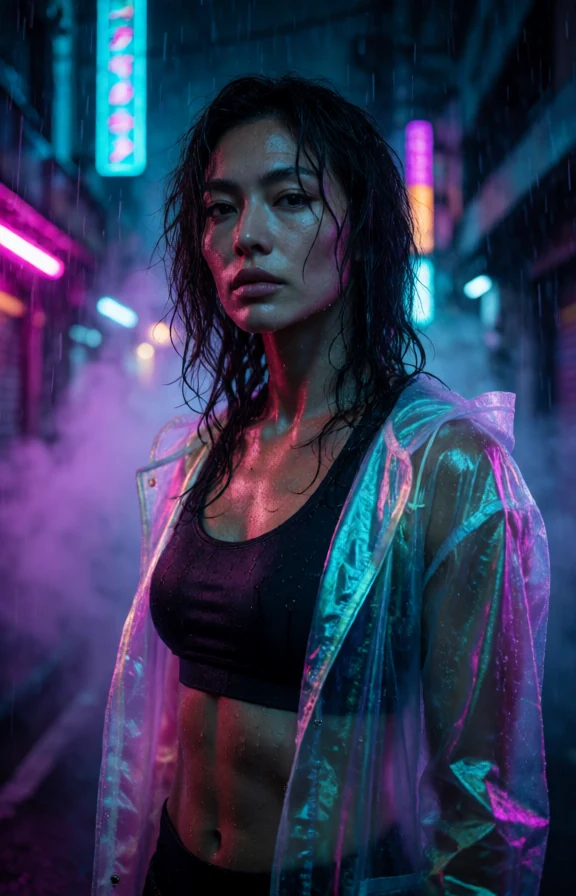
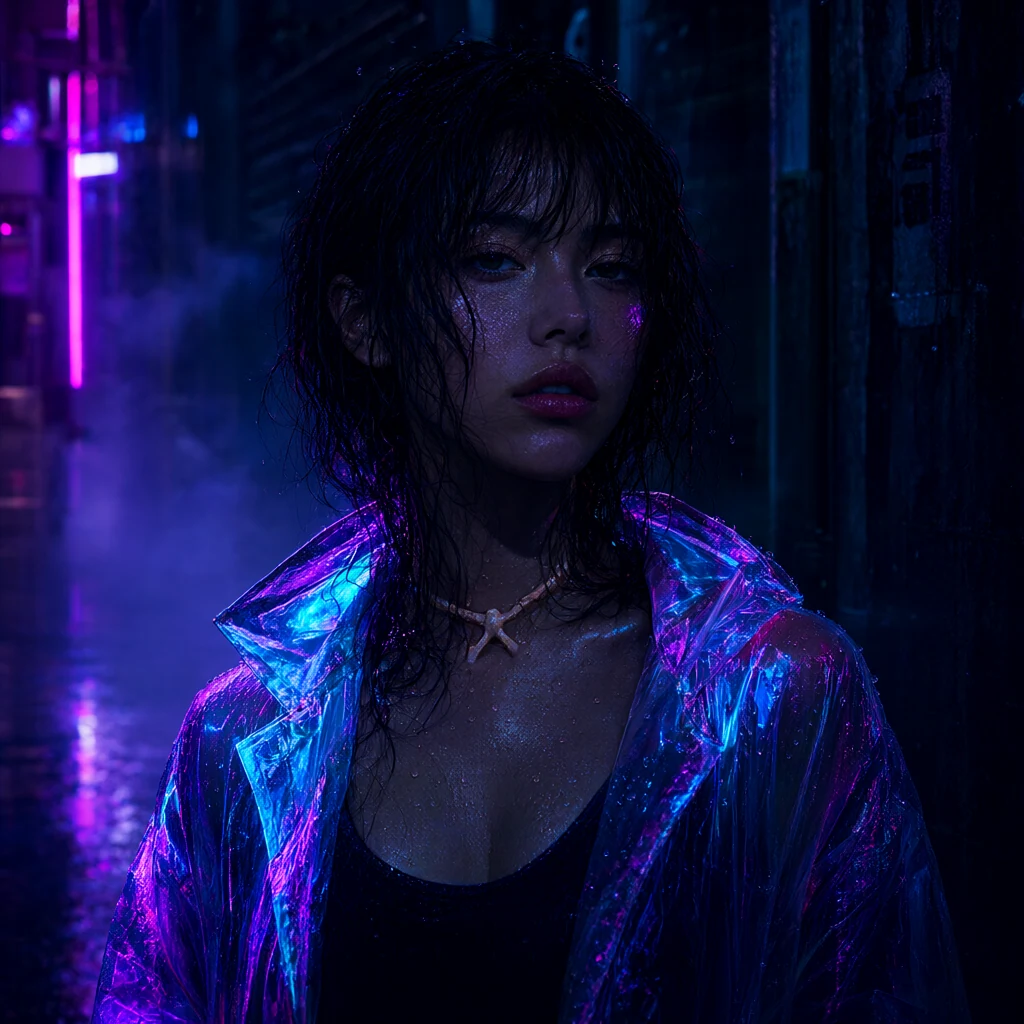
Qwen 2.1 Uncensored (Left)
- Material Refraction: The translucent raincoat features micro-wrinkles and realistic optical dispersion of purple/cyan neon.
- Water Physics: Individual droplets bead cleanly on the neck and forehead, reflecting ambient city lights.
- Throughput Parity: Rendered 1024x1024 in 111.6s, achieving speed parity with Krea 2 while delivering twice the resolution.
Krea 2 + LoRA Stack (Right)
- Stylized Aesthetic: Vibrant and commercially appealing neon contrast, ideal for anime/sci-fi poster art.
- Plastic Wax Skin: Specular highlights across the chest and torso resemble glossy CGI plastic rather than wet skin.
- Memory Pressure: Pushed VRAM to 11,928 MiB (97.1% capacity) even at a modest 576x896 canvas size.
3. The Core Anatomical Trade-off: Where Krea 2 Still Holds the Crown
Why uncensored vision models still struggle with lower biological geometry, and how Krea 2's LoRA ecosystem bridges the gap.
While Qwen-Image 2.1 Uncensored dominates in general aesthetics, skin micro-pores, lighting physics, and multi-subject composition, there is one specific domain where Krea 2 continues to outperform it: unconstrained biological micro-topology and lower-body anatomical precision.
Abliteration Is Not Fine-Tuning
Qwen's "Uncensored" status comes from surgical ablation of refusal activations in the Qwen3-VL text encoder. This allows the model to accept sensitive keywords without returning refusal tokens.
However, Alibaba's base pre-training data was heavily scrubbed for corporate compliance. Because the base DiT lacked specialized unconstrained anatomical corpora, requests for fine-grained biological geometry frequently produce smoothed, ambiguous geometry (the synthetic mannequin effect) or distorted limb junctions.
Dedicated Specialized LoRAs
Despite Krea 2's base model enforcing alignment, modders on Civitai (such as community slider authors and specialized fine-tuners) have trained dozens of specialized sliders and checkpoints (including unconstrained merges and anatomical sliders).
These LoRAs directly inject dedicated biological feature maps into the UNet, allowing Krea 2 to render micro-surface dermal contours, complex folds, and close-range physiological geometry with high-frequency fidelity that Qwen 2.1 cannot currently match out-of-the-box.
4. Production Decision Matrix: Which Model Should You Run?
Select the optimal engine based on your hardware constraints and creative pipeline.
Choose Qwen-Image 2.1 Uncensored if:
- You have a 12GB GPU (RTX 3060, RTX 4070) and cannot afford OOM crashes.
- You need high-resolution outputs (1024x1024 or higher) without downscaling.
- Your work emphasizes photorealistic skin pores, realistic hair, and natural lighting.
- You generate multi-character interactions, hand gestures, and narrative prose.
- You prefer a clean, zero-LoRA workflow that loads quickly in ComfyUI.
Choose Krea 2 with LoRA Stack if:
- You have 16GB+ VRAM (RTX 4080, RTX 4090) to accommodate heavy patch stacks.
- Your primary objective is unconstrained biological micro-topology where community LoRAs excel.
- You prioritize glossy, stylized commercial fashion looks over raw photography.
- You already have a calibrated ComfyUI workflow with precise slider weights.